
How I got started in freelance travel writing
In 5th grade, a travel writer came to visit my class in rural Wisconsin. He talked about spending francs in Paris and exotic Africa. Some of my classmates seemed bored, longing for recess, but I was enthralled. Better still, he was paid to write about his experiences. I’d never heard...

The freelance travel writer lifestyle
Freelance travel writing is, without doubt, the dream job. You get to explore the world, describe new experiences and spend time writing, all in the hours that suit you. But like any occupation, while it's very rewarding, it can come with a few challenges. So if you're considering travel journalism as a career, have a think about the kind of lifestyle it entails to decide if it's definitely the thing for you.
What I Love About Being a Freelance Travel Writer
As a freelance travel writer, your job is to find new places and tell new stories in a way that stains the reader’s imagination and makes them long to go where you’ve gone. I love this. It’s why I get out of bed in the morning. And because it’s nearly impossible to write an accurate, engaging story without experience, it forces me to get my head out of the guidebook and pay attention.
20 Great Gift Ideas for the Aspiring Travel Writer
Becoming a successful travel writer requires spending a lot of time on the road, often with little time for preparation. And of course it goes without saying that you’ll be moving light and fast, so checking a bag is out, and you’ll need every item of gear to be supremely useful, unquestionably reliable, and stylish enough that you won’t be embarrassed when you land that coveted interview with the foreign minister.
Through thousands of miles living, working and writing on the road, this is the gear that our travel writers have found to be the absolute must-haves. Any one would make a great Christmas gift for an aspiring travel writer, or a frequent traveler of the business or leisure variety.
 Kindle Fire HD
This piece of kit hardly needs an intro. At first, I just kept novels on my Kindle to browse on boring journeys. Now I get all my travel guides loaded up on here before I set off – much lighter than carrying around loads of books and easily searchable, too. I even put PDFs of my draft articles on here to read through, edit and show to others. I’ve got the keyboard version, which although slightly bigger, is much handier for adding notes to your literature – good for quick reference when you’re in the back of a tuktuk trying to figure out where you’re supposed to be going!
 Worlds’ Best Travel Experiences: 400 Extraordinary Places
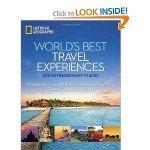
Even travel writers need inspiration sometimes, and National Geographic has always delivered on that promise for me. This brand new, beautifully-produced book makes a great gift for anyone who loves to travel. The full-color photos on nearly every page will have you drooling over far-off landscapes so gorgeous you’ll sometimes ask yourself if such places really exist. Meanwhile, short vignettes by some of the best travel writers in the world, including Pico Iyer, Bill Bryson, and Gore Vidal, will keep you smiling.
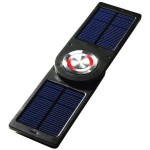 Freeloader Pro Solar Charger
This is another little gadget that I don’t use regularly, but it did come in pretty useful when I was driving and camping around New Zealand. Trying as I was to avoid pricey campsites with such luxury facilities as power sockets, this little beauty helped me keep my phone and camera charged each day by collecting the sun’s rays through the windscreen as I drove along.
 Apple 11-inch MacBook Air
For me, a great laptop is all about battery life. After I’ve watched a film on a long bus journey and uploaded the day’s photos, I still want to be able to write notes from the day and edit my blog. For days at a time in South America, I was racing through Bolivia to Brazil and taking buses instead of staying in hostels for the night. Few would argue that Apple products offer the best battery life and my beloved MacBook Air consistently delivers the promised 5 to 6 hours between charges – a boredom fighter and fantastic work aid.
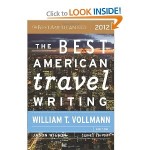 The Best American Travel Writing
For travel writers, each year’s edition of The Best American Travel Writing is kind of like the Oscars for travel writers. It’s a glimpse at the state of the art in travel writing, an opportunity to inspire, learn, laugh, and be humbled. It’s also just pretty darn good writing. The perfect gift for anyone who has ever turned down a sketchy-looking alleyway in a foreign country because, well, it was a sketchy-looking alleyway in a foreign country.
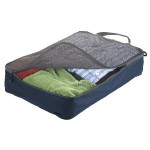 SeatoSummit garment bag
I only pack one backpack when I travel, which means my hiking boots, emergency snacks, and underwear float around in one big compartment. Not cool. SeatoSummit garment bags changed all that. I tried them out on a trip to Portland and was able to keep my clothing clean, folded, organized, and away from my dirty shoes and clementine oranges.
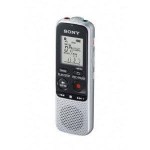 Sony ICD-BX112 Digital Voice Recorder
I adore this piece of kit. When you’re horse riding through the fields of Uruguay, or atop a camel in the African desert, a million thoughts are racing through your head and you can’t put them on paper until the experience is over. I like to clip this onto my shirt and describe what I see and how I feel so that later I can listen to the recording and jot down notes.
 Moleskine Notebook
I’m an old-fashioned girl at heart, and there’s something romantic about jotting down notes on the crisp pages of a Moleskine that makes me feel forever on the trail of Hemingway. Plus, the smart black leather cover also does well at reminding me to get on with work rather than play!
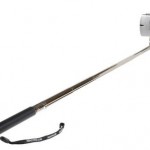 Xshot Extender 2.0
I lugged a tripod around India with me for two months before handing it over to another friendly traveler in a hostel. I simply didn’t use it and although it folded up pretty small, when I’m out exploring for the day, it’s just another piece of kit in my day bag. However, my boyfriend found this neat camera extender with which you can you can take great snaps of yourself without the need to fiddle around with timers or find a suitable ledge to rest your camera on. We got some great pictures of us nicely framed in front of famous sights such as the Angkor Wat temples. And at half a kilo it won’t weigh you down.
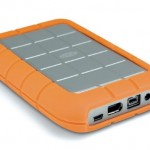 LaCie Rugged 500GB All-Terrain Hard Disk
The three golden rules of travel writing? Back up, back up, back up. I’ve lost work before and nothing feels worse. You’ll need to keep all your documents saved in more than one place, especially if you’re carrying around a laptop or netbook desirable to thieves. I’ve been using this LaCie external hard drive for the last couple of years, keeping it separate from my laptop at all times to minimise the chances of losing all my work in one fell swoop. This model is fantastically practical thanks to its thick rubber edging, and can even survive a drop down a canyon (it was a small canyon, but a canyon nonetheless!) – so there’s no doubt it’ll withstand the beating that it suffers in my backpack.
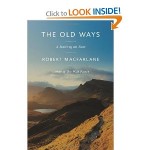 The Old Ways: A Journey on Foot
The numerous fans of The Wild Places and Mountains of the Mind will be thrilled to learn that Robert McFarlane has a new book out, and like its predecessors, The Old Ways is wowing critics and readers alike with McFarlane’s unique and genre-defying storytelling. Who ever said that travel writing had to read like, well, most travel writing? MacFarlane shows that subject matter should not be a hindrance to achieving literary genius.
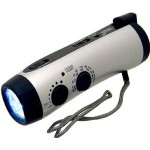 Kaito Hand Crank LED Flashlight
When I’m camping out in the woods or spending the night in a town without electricity, this little flashlight casts the perfect amount of light to write notes by at night. I’m now on my second one, having left the first one with a family in the mountains of Northern Laos. Once I realised they had to do a day’s walk to the nearest town to buy batteries, I understood why they found this gadget so magical.
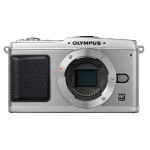 Digital Camera: Olympus PEN E-P1
What makes the Olympus PEN E-P1 camera the best bet for travel writers is that the camera body is lightweight and discreet, but still takes beautiful photos. The extended battery life allowed me to shoot hours of HD video and hundreds of still shots in Belize’s Mayan villages with zero access to electricity.
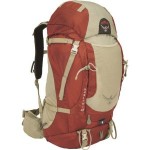 Backpack: Osprey Kestrel
Osprey bags are well known for their durability, which was extra important when I had to carry my entire life on my back while I travelled throughout Belize for three months. Rips, tears, or broken zippers weren’t an option – and they weren’t an issue.
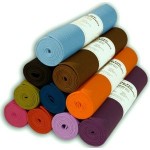 Yoga Mat
A yoga mat is my one essential non-essential when I travel. I’ve used it as a makeshift bed in Paraguay and for actual downward dog stretching in Cabo, San Francisco, and Belize. To transport the mat most effectively, I roll it very tight, secure the top with a rubber band, and insert the bottom into the exterior pocket of my backpack designed for a water bottle.
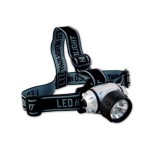 Headlamp
Headlamps are the ultimate hands-free device. In Paraguay, I used my headlamp every night on my way to the dark latrine. In Belize, I put it to good use exploring wet and dry caves. And I can’t forget all those nights it illuminated my travel journal as I wrote down my latest stories.
Read More
How I got started in freelance travel writing
In 5th grade, a travel writer came to visit my class in rural Wisconsin. He talked about spending francs in Paris and exotic Africa. Some of my classmates seemed bored, longing for recess, but I was enthralled. Better still, he was paid to write about his experiences. I’d never heard the term travel writer before that day. To me, it was a small miracle that such a career even existed. I vowed I would grow up and become a travel writer. Of course, reality and fear eventually kicked in around high school. I pushed aside the idea of travel writing as a childhood dream, something only a few lucky people could do. I went to college to study social work and considered myself fortunate that I’d been able to study abroad twice.
Fate intervened. Before graduation, I rekindled another forgotten childhood dream: The Peace Corps. Without my social work degree, I never would have been accepted and sent for two years to work with youth in Paraguay.
Long term volunteering abroad
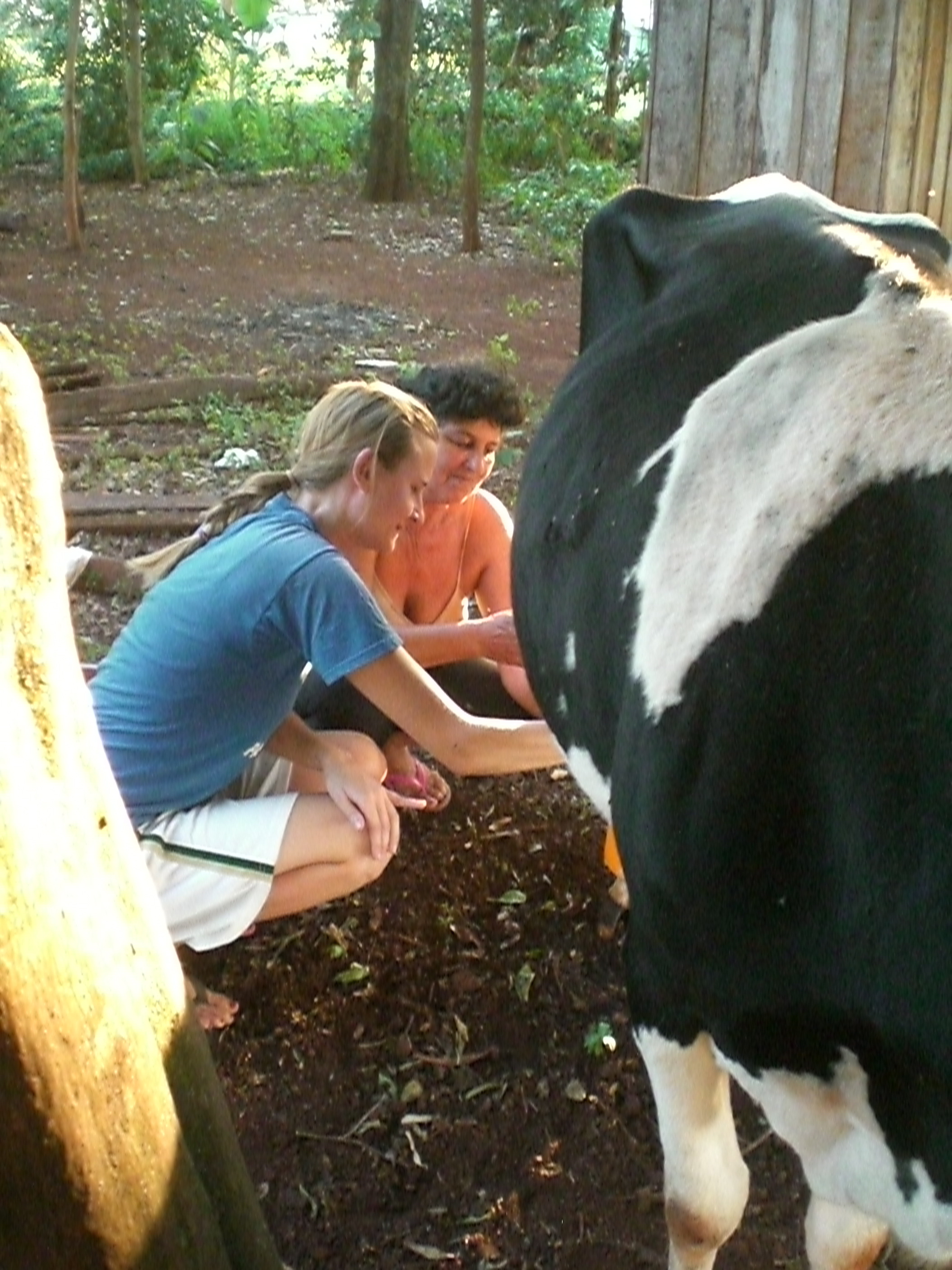
Megan milking a neighbor's cow in Tavapy Dos, Paraguay
Peace Corps was where I began to hone all the skills I now rely on as a “professional traveler”. Beyond learning Spanish and a few swear words in the indigenous language of Guarani, I figured out that people in other countries aren’t dangerous. I learned to stay in strangers’ homes, eat their food, and talk to them. I figured out how to use public transportation, deal with stomach upsets, and prevent my stuff from being stolen. I learned that even when the worst things happen, (like the time I got diarrhea in prison), I could bounce back and turn it all into a great story. I got used to being homesick, expecting the unexpected, and going with the flow. I searched out the unusual and the overlooked because that is where all the good stories are.
Travel writing began to creep back into my consciousness. But fear still reigned. I would never be a good enough writer. I was a good traveler; I had proved that in Peace Corps and then on a subsequent trip to Southeast Asia and China. But maybe, just maybe, I could write a travel memoir about Peace Corps and Paraguay?
Learning to write about my travels
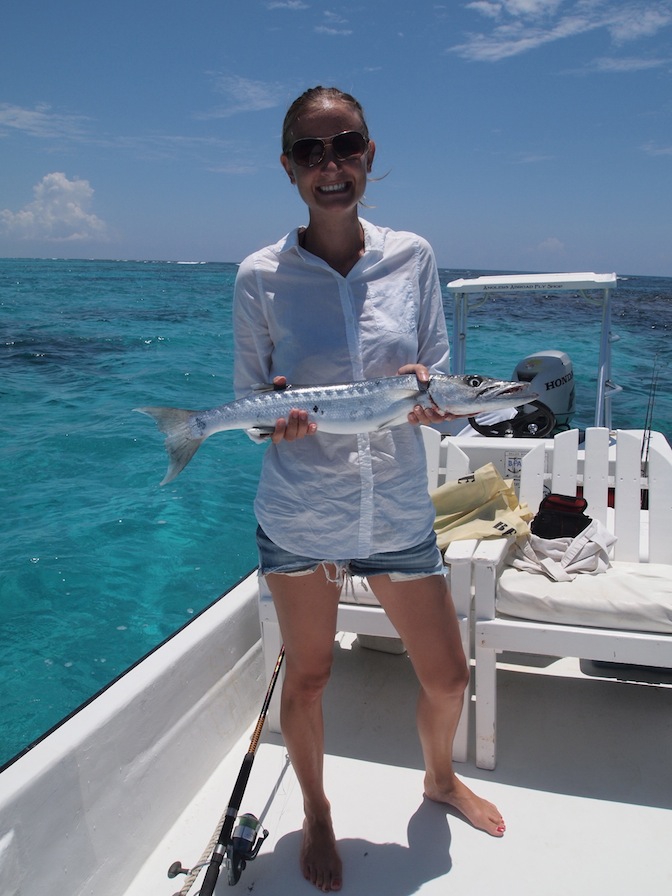
Megan in Belize, with a barracuda she caught line fishing off Caye Caulker.
I did a surreptitious Google search for “travel writing courses” and came across MatadorU, a program offered by the publishers of Matador Network, one of the largest travel magazines. The more I researched the program, the more I liked it. MatadorU was backed by National Geographic Traveler and had laid the courses out in an approachable way. It looked like I could take the course from anywhere in the world, which was good, because I was finished with Peace Corps and essentially homeless. I’d been accepted to a graduate program for social work in New York City, but wasn’t sure I wanted to go. Again I had to choose between pursuing my dream of becoming a travel writer, or relinquishing it in favor of a safer, more conventional path.
I signed up for MatadorU thinking I could learn a lot about travel writing for my book before proceeding to grad school, without any plans for trying to become a freelance writer. The first thing I had to do for MatadorU was set up a WordPress blog. I loved how easy this new platform was, but I was so terrified of someone stumbling upon my (bad) writing that I used a fake name, “Mega Woo”. With each week’s lesson, my skills – and confidence – began to grow. I wrote a piece about being married in the Peace Corps and was absolutely shocked when a Matador editor emailed me and offered to buy the piece for Matador. A few weeks later I was invited on a press trip in Cabos, Mexico. Then I sold another piece. I was doing it, I was travel writing!
Ever wish you had a good friend who was already established as a travel writer, and could show you the ropes and introduce you to the editors, press agents, and publishers you’d need to know to succeed?
 Matador Networks’ Travel Writing Program is run by one of the largest travel publishing companies—the very same companies you’ll need to pitch to launch your career.
Unsurprising then that some of the most successful travel writers got their start studying with this course. It will teach you everything you need to know to launch your career as a travel writer. But more importantly, the contacts you make there will open doors to getting those all-important first published bylines.
Becoming an official freelance travel writer
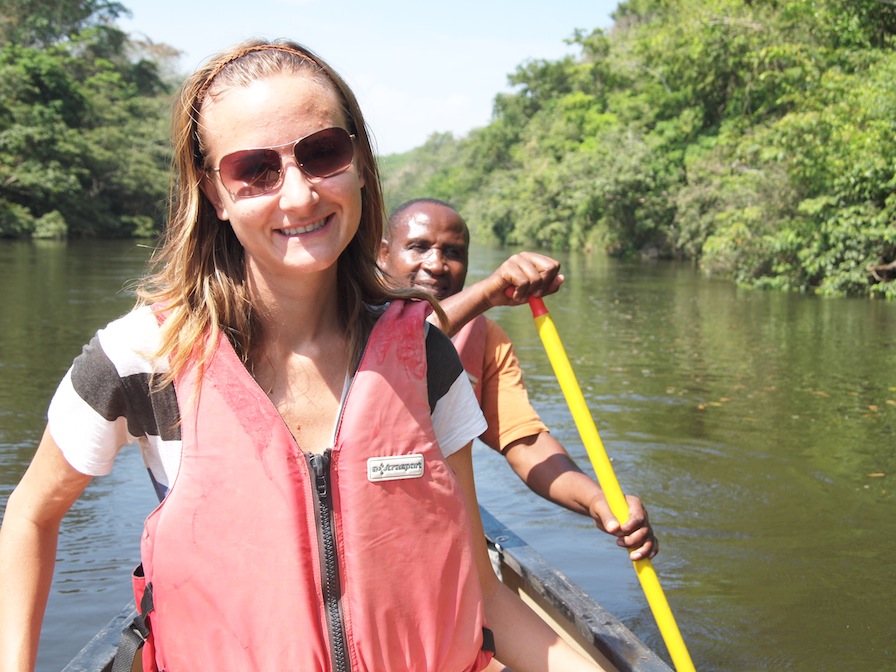
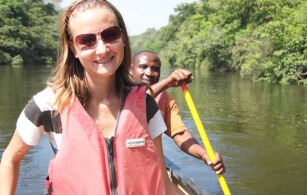
Megan paddling on Belize's New River in Cayo
But I still had that pesky graduate school admission to think of. I moved to New York City and found a walk-up on the Lower East Side. I sat in my window every night until three, writing. I went to the grad school orientation and looked over my class list, but my heart wasn’t in it. I contacted the school and deferred my application. Then I told my parents. They weren’t surprised. Neither was I. I started pitching like mad, realizing I wouldn’t be able to count on student loans to pay my rent. I had to take jobs babysitting and work as a coat check attendant. I didn’t care. I was completely free to do what I wanted for the first time in my adult life. The 5th grader inside of me was so proud.
Still, the 27 year-old with the student loans and Manhattan rent was a little nervous. And occasionally a little voice would ask, ‘who do you think you are?’ I ignored it. I went to the New York Times Travel show with an editor from MatadorU and met the publicists who worked with the Belize Tourism Board. I was on a short list to become a writer-in-residence in Belize. The publicists were very impressed with my Peace Corps experiences. A week later, I signed the contract. I’d be traveling in Belize for three months and writing about my experiences. I found a subletter for my apartment, packed a backpack, and tracked down that travel writer who’d inspired me in 5th grade. I owed him a huge thank you.
Read MoreFreelance travel writing as a career

A career in freelance travel writing might lead you into writing copy for travel-related websites, contributing to destination guides, producing features for magazines or newspapers, reviewing tourist attractions or hotels or even creating a whole book about your experiences. In short, it’s a career that’s as varied as you want to make it.
Most writers start by generating online content, as there is so much more demand. However, as you build up your portfolio over time, you may be able to move into the more lucrative print market.
But can you really make a career out of freelance travel writing, and what will it involve? Well, let’s see.
Going it alone
There’s no doubt about it, working as a freelancer in travel journalism can be as tough as it is rewarding. You’ll need confidence in your writing ability and plenty of perseverance to get through the first few months but, over time, you’ll build up a network of contacts and long-term sources of work that will make you feel more secure. If you have to pin motivational quotes above your desk then so be it!
A career break spent abroad or long term travel plans can be a great springboard into careers in travel writing. Doing it this way can feel much less scary than just quitting your job and starting to look for freelance work. You can spend time researching and writing articles while you travel, and start to build up a portfolio before you return – if you plan to come home, that is.
Finding freelance writing jobs
Your freelance travel writing career is what you choose to make of it. Spend time looking online to get an idea of all the types of jobs out there. Think about what you’d most like to do and where you’d really love to see your writing published. Your dream might be to get a full length feature on a subject of your choice published in Conde Nast Traveller, so keep that in the back of your mind as you go. You might not be able to achieve it straightaway but there’s no reason why you can’t make it happen. It’s important to be ambitious and have a goal in mind for your freelance travel writing.
Across all the different sorts of travel journalism, you’ll get to work with lots of different people including editors, other copywriters, public relations staff, as well as all the interesting people you’ll interview for your articles. You might even end up with your own literary agent and publisher.
Read more about the nuts and bolts of finding work in our other article, The five rules of finding travel writing jobs.
Choosing the right path
There is no set path into becoming a freelance travel writer. Some people work their way up in a magazine, others start their own travel blog and get scouted by a publisher and others publish articles in lots of different places throughout their careers. So the good news is that as long as you’re writing, you can’t really go wrong when it comes to career progression.
And there are anough challenges to keep you going over the years. Keep setting yourself ever-evolving goals and you’ll always be achieving new things.
Funding your next adventure
Aspiring travel writers often ask how much money they’re likely to earn. Unsurprisingly, the answer is that potential salary varies…
If you want a freelance travel writing career, we’ll hazard a guess that you’re probably more keen to see the world than living the good life at home. You might dream of spending years travelling through India, writing as you go, in which case you’ll hardly need any cash to live comfortably. If you plan to work from home however, you’ll have to think about how much you’ll need to pay your living costs and fund the lifestyle that makes you happy.
Careers in travel writing can certainly earn you a good living, and travel journalism can be quite lucrative, but it’s worth realising up front that it’s unlikely to buy you a luxury sports car or a countryside mansion.
You’ll have to set your own rates, usually by the hour or per word. Work out how much you can write in an hour – including research and editing time – and decide what you think would be a reasonable rate. If you’re just starting out, your fee will have to reflect your experience, but as time goes on and you win more work, you’ll be able to start charging more.
A little bit on the side
If you’re savvy, there can be perks. Many travel writers manage to get holidays, weekend breaks and meals out at some of the best restaurants for free in exchange for a bit of PR. If you’re clever, you can then make money on top by then selling articles about your experience. However, such work trips are relatively unusual these days and should not be your sole motivation for a career in freelance travel writing.
So, before you declare your passion for travel writing and throw in the towel at your existing job, think carefully about whether it will allow you to live the life you truly want.
Read MoreFinding freelance travel writer jobs: 5 rules

There are freelance travel writer jobs to be had out there, even if you’re just starting out. Follow our five simple rules to discover how to get writing jobs and you’ll be getting paid to travel the world before you know it!
-
Build your portfolio
To answer those ‘travel writer wanted!’ advertisements, you’ll need to be able to respond with some samples of your work – a portfolio. Potential employers and editors need to see that you can write well, understand a bit about your style and also see you as a professional.
If you haven’t yet been paid for any travel writing work, it doesn’t matter. Many writers are hired for freelance travel writer jobs on the basis of their personal blogs, internships or other unpaid work.
-
Network
Ever heard the saying ‘it’s not what you know, it’s who you know’? Well, this could never be more true than when seeking travel writing job opportunities. Luckily, networking doesn’t have to mean printing business cards and making awkward small talk at events and parties – you don’t even have to be a grade A charmer. We mean networking on the web.
To network successfully online, you’ll need a blog that shows off your best writing. It could include articles you’ve written for fun as well as paid work and photographs from your travels. While it needs to look professional, it should also reflect a bit of your personality. Once you’ve got your own catchy web address, get your blog and your writing out there. Make the most of Twitter, Facebook, LinkedIn, and link up with other travel blogs to get your work seen and appreciated. While none of these are freelance writer job sites, if you link up with the right people and groups, before long you’ll start getting travel writing job opportunities.
-
Start small
Let’s forget freelance travel writer jobs for a minute. Another form of networking – and a great way of building your professional portfolio at the same time – is by landing work experience placements or travel writing internships.
These aren’t necessarily easy to find, but you could start by searching the web and approaching various publications directly to enquire. You can find opportunities as well as other tips on sites such as The Travel Writing Portal.
-
Apply online
There are several good freelance websites that advertise travel writer job listings. Elance, PeoplePerHour and Freelancer are just three we recommend. With these sites, you set up your own profile and portfolio to apply for jobs. While it can be tricky at first to persuade potential employers to hire you, over time you’ll win jobs and start getting reviews and feedback that will boost your rating and make you more likely to succeed. What you charge is up to you and payment happens securely through the site direct to your bank or PayPal account.
-
Make a proposal
When you’ve got a good portfolio together of all your best articles, and you’ve had plenty of paid travel writing jobs, you should be feeling pretty confident. But don’t rest on your laurels, this is the time to start the toughest, but most lucrative, part of your journey.
Phone or email travel editors to find out whether they accept pitches and if they’re looking for anything in particular. Consider publications such as in-flight publications and supermarket magazines. If they ask you to send through your ideas just don’t give too much away so that an existing employee can write your article instead of you!
Make a note of how long you spend each day searching and applying for travel writing jobs. To begin with, this will be quite high but over time you should start to see the balance change and you’ll be working more than you are looking for work! If not, then go back through this article to figure out what’s going on.
So what’s stopping you? Get out there and start job-hunting!
How I Broke Into Freelance Travel Writing
Breaking into freelance travel writing is not so different from breaking into other types of journalism. Start with small jobs, such as articles for your local newspaper, and gradually work your way up. As your portfolio builds, you can attach clippings of your past work to the pitches you make to editors. Markets that pay a dollar a word can offer a steady living as you get involved with press and media trips that take you across the world. As your list of clients grows, you can bolster your career by starting a blog and pitching book ideas to publishers such as Lonely Planet or Rough Guides. Finally, you become a Harvard professor and retire comfortably, living out the rest of your days sipping martinis on a private beach. Right?
While I’m not exactly qualified to cover the last two steps, I do make a comfortable living from freelance travel writing and can offer some sound advice for beginners. For starters, you need to learn how to tell a story and develop your own voice as a writer. Without a doubt, the best way to do this is to write stories about where you live. While this is much more exciting if you live in, say, San Francisco and not Chandler, Arizona, writing about the places you know offers a variety of perks. For one thing, you already know a bit of the history and culture and, if you’re lucky, you may know people who can give you an inside perspective on local events.
I got my start in travel writing by showcasing local theatres, restaurants, museums and hiking trails for newspapers in Asheville, North Carolina. While the pay wasn’t great, it got me thinking about how to describe places to my reader in an inventive way. It also gave me permission to be a tourist in my own home: asking questions about the architecture or noticing trends in cuisine and fashion that I normally wouldn’t. Even if my home town wasn’t such a mecca for artists and outdoor enthusiasts, I still would have managed to dig up hundreds of story ideas. It’s easy to forget that even in such glamorous destinations as Paris or Buenos Aires, there are still regular people living regular lives. While a local landmark or hiking trail may not be news to you, it still counts as a tourist destination for outsiders.
After publishing a few articles in the local paper, I began seeking out better-paying markets that specialize in travel. Thanks to the global recession and upward trends in internet publishing, many print markets have been driven out of business. Unfortunately, that includes thousands of regional magazines and newspapers that travel writers used to could count on for their income. Luckily, I caught this trend early and began to research magazines that had both an online and offline presence. The best of these include AFAR, American Way, BETA Magazine, and Backpacker, all of which pay up to a dollar a word.
Despite the steady rise in work, I began to feel as if I’d reached a plateau. Many of my editors wanted real-life experience in international destinations, and I had never left the country. Gradually I began to formulate plans for a three-month backpacking trip in Europe that included jaunts through Ireland, France, Italy and multitude of other countries. Since I wanted absolute freedom in my itinerary, I decided to save money on my own and shunned opportunities for media trips and tourism assignments that might have shouldered some of the cost. Until this point, it was still questionable whether or not I was a masochist. By now, the debate was settled. Needless to say, saving five thousand dollars on a beginner’s freelancing income was a miraculous feat, survived only with the help of bulk supplies of Ramen noodles.
Nevertheless, I saved the money and took out a credit card, and in early 2009 stepped aboard a plane to Ireland. I had pitched a few potential stories to editors, but my most important decision was starting a blog for daily travel updates. I can’t stress this enough for up-and-coming travel writers. Thanks to social networking sites such as Facebook and Twitter, travel bloggers can reach a wide audience of subscribers and keep them hooked. Some advice I wish I’d received early on was to think of my blog as a novel-in-progress. That means finishing each
entry with tomorrow’s itinerary, a question, or a tantalizing quote that keeps your readers coming back. This works the same way as cliff-hanger chapter endings in a novel, and your readers will faithfully clamor to read each day’s update.
Use your blog to help keep notes of descriptions and other details that you’ll want to remember when you’re writing later on, and always add images to complement your story. After learning these techniques and others, it wasn’t long before I developed an audience that couldn’t wait to hear what happened next in my journey. Later, when it came time to write a book, I used my blog entries to form the outlines and began condensing the different posts into chapters. I considered this a win-win situation: while I got to keep notes, garner exposure, and build a loyal following, my readers got to live vicariously through my experience. This is the key function of the travel writer. You are not only a storyteller, but a conveyor of excitements; boldly plundering each experience and passing it on to your reader in an effort to introduce them to the world outside their lives.
After three and a half months I returned to the States and got to work publishing articles for different markets. I used resources such as the Writer’s Market books and Craig’s List forums to find private clients, and began writing for online publishers such as Trails Travel, Golf Link, USAToday, and The Washington Times Communities. Thanks to some personal networking, I also began editing for travel publications such as Adventure Traveler Online, all while maintaining a healthy schedule of traveling and writing.
Before trying to break into freelance travel writing, it’s best to ask if the travel writer’s life is right for you. Do you love having freedom over your work schedule? Do you love visiting new places, and finding new ways to tell old stories? Do you feel a certain bravado about watching your day unfold on your own terms? If so, then it might be worth your time to take a stab at travel writing.
Read MoreFreelance Travel Writing Gear: my top 10 must-haves
Once, while sitting by the river and working on my laptop at an eco-lodge in Belize, another guest approached me and said, “Travel writing must be the life – you get paid to vacation and they buy you a free laptop.” There are a few things wrong with his sentence, but the one I’ll focus on here is the “free” laptop. Freelance writers aren’t given the equipment we need to do our job. We buy it ourselves and haul it with us wherever we end up going: camel riding in Morocco, practicing yoga in Mexico, or scuba diving in Belize.
Price is a major factor in deciding what I need to buy, but durability, weight, and multi-functionality matter too. The trick is to invest in gear from the States that I can’t easily find in foreign countries. Notebooks, memory cards, and toiletries are available all over the world, but my core list of crucial items were bought before I got on the plane. Here is a list of must haves to bring with me when I travel.
Backpack: Osprey Kestrel
Osprey bags are well known for their durability, which was extra important when I had to carry my entire life on my back while I travelled throughout Belize for three months. Rips, tears, or broken zippers weren’t an option – and they weren’t an issue.
Digital Camera: Olympus PEN E-P1
What makes the Olympus PEN E-P1 camera the best bet for travel writers is that the camera body is lightweight and discreet, but still takes beautiful photos. The extended battery life allowed me to shoot hours of HD video and hundreds of still shots in Belize’s Mayan villages with zero access to electricity.
 Laptop Computer: Apple MacBook Air
I’m a firm believer that anything I take with me on a trip has a good chance of not coming home with me. I proved I’m okay with that when I left my iPhone in Morocco. But if anything were to happen to my MacBook Air, I’d be devastated, and not just because of its high price tag. As a blogger, my light as air MacBook Air is my business partner and best friend. For me, the cost is justified because I don’t get a sore shoulder from lugging a bulky computer everywhere, and the MacBook Air is lightning fast, which saves me time.
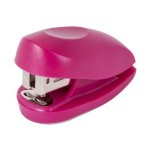 Mini Stapler
While in Morocco, I collected hundreds of business cards, menus, flyers, receipts, and promotional materials because that information becomes vital when writing articles after the trip. The easiest way to organize all that loose paper is to simply staple it into a notebook. Voila. Organized.
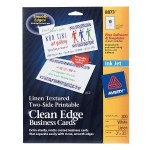 Business Cards
I wish I’d printed out business cards earlier in my career. Having my name, contact information, and website on one little card is much more professional and organized than scribbling on a scrap of paper. In Latin America especially, business cards are a requirement. Not having one reads as amateur. Exchanging cards with anyone from hotel owners to interview subjects is as necessary as a handshake, mostly for formality.
 Smartphone: Apple iPhone
A smartphone is like a miniature laptop that fits in my pocket. When I’m traveling I can quickly access travel apps and email, and take photos for my social media platforms. In New York City, I use it constantly to navigate the subway system. Oh, and that Starbucks app? Perfect for finding the nearest free bathroom.
Headlamp
Headlamps are the ultimate hands-free device. In Paraguay, I used my headlamp every night on my way to the dark latrine. In Belize, I put it to good use exploring wet and dry caves. And I can’t forget all those nights it illuminated my travel journal as I wrote down my latest stories.
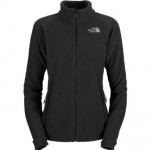 Outerwear: NorthFace Fleece Jacket
I spend very little money on clothing. Most of my travel stuff is destroyed in months and left in whichever country I’m visiting, but I made an exception with my NorthFace Fleece. It’s durable, washes well, and adds a layer of warmth without much bulk – features that more than justify the precious space it takes up in my backpack. I’ve worn it biking in China, hiking in northern California, and on the windy beach in Uruguay.
SeatoSummit garment bag
I only pack one backpack when I travel, which means my hiking boots, emergency snacks, and underwear float around in one big compartment. Not cool. SeatoSummit garment bags changed all that. I tried them out on a trip to Portland and was able to keep my clothing clean, folded, organized, and away from my dirty shoes and clementine oranges.
Yoga Mat
A yoga mat is my one essential non-essential when I travel. I’ve used it as a makeshift bed in Paraguay and for actual downward dog stretching in Cabo, San Francisco, and Belize. To transport the mat most effectively, I roll it very tight, secure the top with a rubber band, and insert the bottom into the exterior pocket of my backpack designed for a water bottle.
Read MoreHow to become a great freelance travel writer

Can you write? We’re looking for a good, solid ‘yes!’ in response to that question because confidence is the first and most important thing you’ll need. However, every good writer can always improve and in the competitive field of travel journalism, you’ll need to take every opportunity to improve your skills and get ahead, whether it’s just reading a book or signing up for a travel writing class.
Learn from the best
There is a lot you can teach yourself before you pay out for travel writing courses or classes. Look online for great examples of travel writing and read them carefully. What is it about their writing that has won them a competition or got them published? How is it different to your writing?
You don’t have to change your style to imitate recognised writers, but understanding what makes others successful – such as a unique perspective or a descriptive way of writing – will help you up the game with your own work. Check out the winners of competitions such as the UK’s Daily Telegraph weekly Just Back competition, or the yearly Society of American Travel Writers awards.
Enroll in a course
To truly learn travel travel writing and make it your craft, you will probably need some professional guidance. Many professional travel writers enrolled on a travel writing class at the beginning of their careers – there’s certainly no shame in ‘going back to school’. If you like the feeling of learning in a classroom environment, then look for evening classes in your local area or research courses at your local colleges.
Many educational centres and companies offer travel writing classes via distance learning, so you can do all your reading and coursework in your own time, from the comfort of your own space.
Go on location
To really make the most of your love of travel and writing, why not join a travel writing class on location? Book a recommended one and you’ll find yourself being able to learn travel writing in a small group with some renowned experts in a beautiful place – perfect!
The organisation Travellers’ Tales regularly organises travel journalism courses abroad. Many courses also include photography as well as travel writing, so you could work on that side of your skill base as well.
Read up
There are plenty of good resources on the web for advice and ideas of how to build your career. Joining an online community is a good way of getting in touch with other budding travel writers. Try becoming a member of your favourite travel magazine or register with sites like The Travel Writer’s Life for insider tips and networking.
But while the web is bursting with information to help you, there’s also lots of confused, non-expert opinions getting in the way. In short, it can be hard to find genuinely useful information. That’s why is well worth investing in a couple of books, complied by experts, that will guide you through the process of becoming a freelance travel writer. They’ll offer, tips, great resources and practical advice whether you are a complete newbie or trying to advance your existing career. Check out the Lonely Planet’s Guide to Travel Writing or Travel Writing 2.0 by Tim Leffel. Both are recommended as comprehensive resources from people at the top of their game.
Throw yourself into learning the art of travel writing and you’ll be all the better for it. Just remember to enjoy the journey!
 Read More
Don’t Go It Alone!
Professional travel writers are eager to share their years of experience with you, show you the ropes, and help you officially become a travel writer.
Travel writing courses will teach you everything you need to know to launch your career as a travel writer. But more importantly, the contacts you make there will open doors to getting those all-important first published bylines.
Megan, one of our contributors, got her start with the travel writing course at Matador U:
"With each week’s lesson, my skills – and confidence – began to grow. I was absolutely shocked when a Matador editor emailed me and offered to buy one of my pieces for Matador. A few weeks later I was invited on a press trip in Cabos, Mexico. Then I sold another piece. I was doing it, I was travel writing!"
